Adapted to Death: How Hollywood Both Destroys and Elevates Your Favorite Comics
There's a particular kind of dread that settles in a comic shop the week after a major superhero movie drops. You've seen it — the regulars filtering in, pulling their books, and immediately launching into a post-mortem. Sometimes that conversation is electric, full of energy and genuine appreciation. Other times it's a quiet, collective mourning. The movie happened. The character you've followed for years is now something else entirely. And there's no going back, because casual audiences don't read the footnotes.
Film adaptations of comics have always been a double-edged sword. They bring new readers through the door — which is genuinely great for the medium — but they also reshape how characters are perceived on a cultural level. When a movie version of a hero or villain becomes the definitive version in the public consciousness, the original material can feel like a footnote to its own legacy.
So let's talk about it honestly. When does Hollywood get it right, and when does it actively damage what it's adapting?
The Flattening Problem
One of the most common complaints from longtime readers is what you might call the "flattening" of complex characters. Comics have decades of continuity to work with — contradictions, growth arcs, moral gray areas, and genuinely strange narrative detours that make characters feel three-dimensional over time. Movies have two hours, maybe two and a half if the studio is feeling generous.
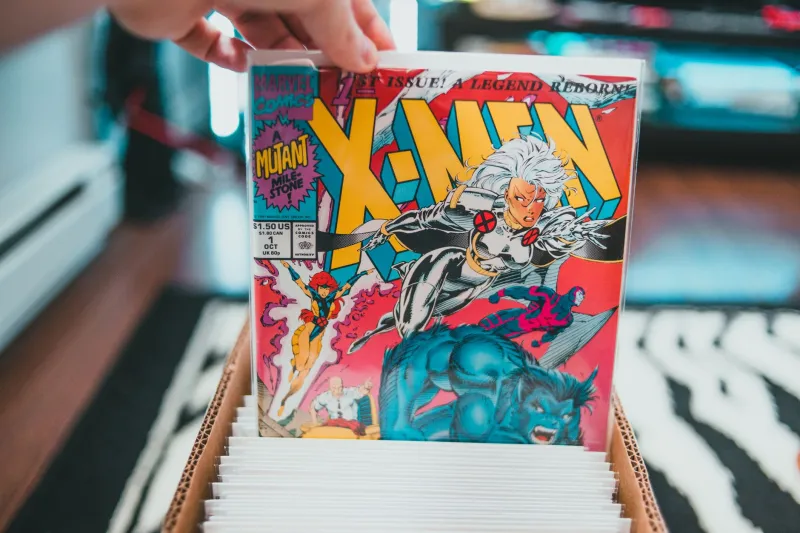
Take the case of Cyclops — Scott Summers — in the original X-Men film series. In the comics, Cyclops is a deeply conflicted leader, someone who carries enormous psychological weight, wrestles with his own rigidity, and occupies a fascinating space between idealism and trauma. On screen, he was reduced to a brooding obstacle in a love triangle. Entire arcs that define who the character is got cut to make room for a simpler narrative.
The result? A generation of moviegoers who actively dislike a character that comics readers often consider one of the most compelling figures in the X-Men universe. That's not a minor creative difference — that's a reputation hit that followed Cyclops into subsequent adaptations and even affected how Marvel marketed him in print during that era.
This isn't about demanding scene-for-scene accuracy. That's not how adaptation works, and frankly, some comic storylines would be genuinely unwatchable if translated literally. It's about whether the essence of a character survives the transition.
When the Movie Becomes the Character
Here's where things get genuinely complicated. Sometimes an adaptation diverges significantly from the source material and still produces something worth celebrating — and in rare cases, something that actually improves on the original.
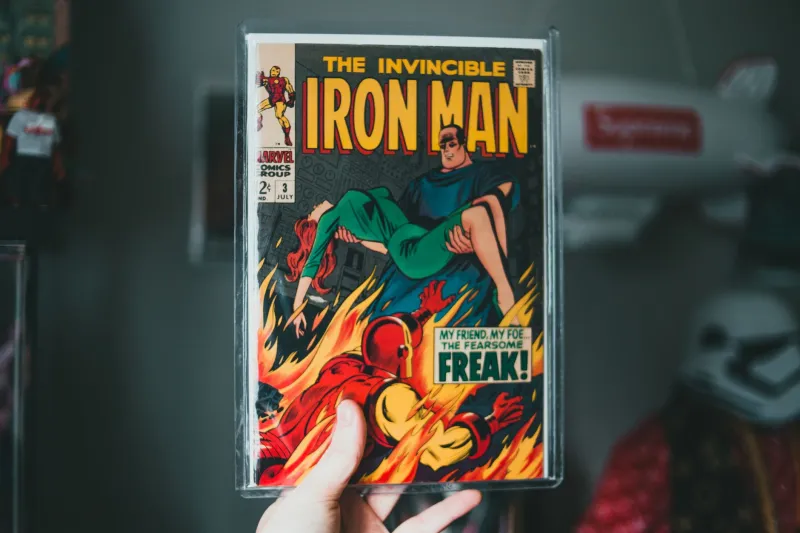
Robert Downey Jr.'s Tony Stark is the clearest example of this phenomenon. The MCU version of Iron Man borrowed heavily from the Warren Ellis and Adi Granov reinvention of the character in Extremis, but the specific personality — the wit, the self-awareness, the particular flavor of arrogance masking deep insecurity — was shaped substantially by Downey's performance and the writers around him. That interpretation then fed back into the comics. Marvel's editorial direction for Tony Stark shifted noticeably in the years following the first Iron Man film. The movie influenced the book that influenced the movie.
Is that a corruption of the source material or a natural creative evolution? Reasonable people disagree, and both positions are worth holding.
The Case Studies That Define the Debate
The Dark Knight remains the gold standard for adaptations that transcend their origins without disrespecting them. Christopher Nolan stripped away the more fantastical elements of Batman's world and built something grounded in crime thriller logic. Purists had objections — and some of those objections are valid — but the film captured the thematic core of Batman's mythology with genuine intelligence. The character's psychology, his refusal to kill, his complicated relationship with justice — all of it survived the translation.
Contrast that with what happened to Deadpool in X-Men Origins: Wolverine. Wade Wilson, a character defined entirely by his irreverence, his fourth-wall awareness, and his unfiltered personality, was literally sewn shut and turned into a silent weapon. It was such a catastrophic misread of the character that it became a running joke — one that Ryan Reynolds and the eventual Deadpool franchise leaned into deliberately. The 2016 film's opening credits sequence exists specifically to mock the Origins version. That's a remarkable thing: an adaptation so bad it required its own corrective sequel.
What Actually Makes the Difference
After watching this play out across decades of adaptations, a few patterns emerge.
Films that succeed tend to have at least one key creative voice — a director, a writer, sometimes an actor — who has genuine familiarity with the source material and advocates for its core identity during production. They understand why the character works, not just what the character does.
Films that fail tend to treat comics as raw IP — a brand with visual assets and a built-in audience — rather than as storytelling with its own internal logic. They extract the surface elements (costume, powers, villain) without understanding the narrative architecture underneath.
For collectors and longtime readers, the frustration is real and it's legitimate. When you've spent years or even decades with a character — tracking their storylines, hunting down key issues, understanding the creative history — watching that character get hollowed out for a two-hour product is genuinely painful.
But here's the thing worth remembering: the comics still exist. The runs that defined these characters are still on your shelf or waiting in a long box at your local shop. A bad movie can't erase Dark Phoenix Saga. It can't unmake Born Again. It can't touch Watchmen — the book, not the movie.
Hollywood can borrow your characters. It can't take your comics.
The Silver Lining Nobody Talks About
For all the valid criticism, adaptations — even mediocre ones — consistently drive new readers toward the source material. Every time a Marvel movie drops, shops report spikes in back issue sales for related characters. New fans come in asking where to start. Some of them stick around and become the collectors who'll be arguing about the next adaptation in five years.
That's not nothing. The medium needs new readers, and if a flawed film gets someone to pick up their first trade paperback, the math still works out in comics' favor.
The goal, ultimately, is for Hollywood to do better — to treat these stories with the same care that readers bring to them. When that happens, everybody wins. When it doesn't, at least we still have the books.