Why Fans Keep Choosing the Guy Without Powers: The Quiet Dominance of Grounded Heroes

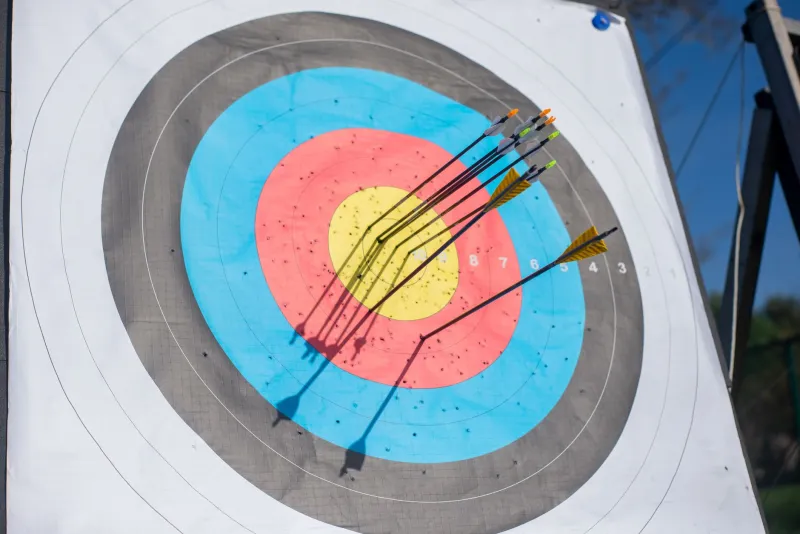
Let's be honest for a second. Marvel's roster reads like a cheat code. You've got a literal god of thunder, a man in a suit of armor powered by arc reactor technology, and a doctor who can bend the laws of reality with a hand gesture. And then there's Clint Barton — a dude who showed up to an Avengers fight with a bow and arrow.
And somehow? He's the one a huge chunk of readers feel closest to.
That's not an accident. It's not even really a surprise once you start pulling the thread. The popularity of grounded, skill-based heroes — and Hawkeye specifically — reflects something real about what comic book fans are hungry for right now. And it goes a lot deeper than just "he's relatable because he's normal."
The Inflation Problem in Superhero Storytelling
Here's the thing about power escalation in comics: it never stops. Every major event arc has to raise the stakes higher than the last one. Thanos becomes Thanos with the Infinity Gauntlet. Then someone tops that. Then someone tops that. After a while, readers start to feel the emotional weight of these stories slip away, because when everyone is operating at a cosmic level, nothing feels genuinely dangerous anymore.
This is where grounded heroes earn their keep. When Clint Barton is in a fight, you actually worry. He can't regenerate. He doesn't have a magic hammer to fall back on. If he takes a bad hit, that's real damage. That vulnerability creates tension that a lot of overpowered characters simply can't manufacture anymore, no matter how creative the writing gets.
It's the same reason stories like Daredevil and Hawkeye (Matt Fraction's celebrated run in particular) resonate so hard with readers who've been around the block a few times. The stakes feel human-sized, and human-sized stakes are the ones that actually land emotionally.
The Psychology of Choosing the Underdog
There's solid psychological reasoning behind why we connect with characters who succeed through effort rather than innate ability. Psychologists who study narrative transportation — the way we mentally "enter" a story — have found that readers form stronger parasocial bonds with characters whose struggles mirror achievable human experiences.
In plain terms: we can't fantasize about being Thor in any realistic way. But we can imagine what it might feel like to be the most skilled person in a room through years of dedication and sheer stubbornness. That's a fantasy with a ladder you can actually picture climbing.
Clint Barton specifically layers on top of that foundation with a backstory that doesn't sanitize his flaws. He's made bad calls. He's had complicated relationships. He's struggled with hearing loss in ways that the comics haven't shied away from addressing. That's not the biography of an aspirational demigod — that's something closer to the biography of a person, and readers feel that difference acutely.
What "Relatable" Actually Means in 2024
The word relatable gets thrown around a lot, and it's worth being precise about what it means in this context. It doesn't just mean "this character shops at Target and complains about rent" (though the Fraction/Aja Hawkeye run did lean into that slice-of-life energy brilliantly). Real relatability in comics is about emotional truth — the sense that a character's interior life maps onto something you've actually felt.
Clint's best stories are about imposter syndrome. About being surrounded by people who seem more naturally suited to the job and finding a way to contribute anyway. About the specific exhaustion of being competent in a world that keeps demanding more. American readers in particular — living through an era of intense economic pressure, professional uncertainty, and a general sense that the game is rigged for people with advantages you don't have — find that emotional frequency deeply familiar.
It's not a coincidence that Hawkeye merchandise, cosplay, and fan community engagement spiked significantly after the Disney+ series leaned into exactly these themes. The show didn't invent Clint's appeal. It just translated what comics fans had already understood for years into a format that reached a wider audience.
Skill as Superpower: A Different Kind of Fantasy
Here's a reframe that's worth sitting with: maybe Hawkeye does have a superpower, and it's just one we've culturally decided to categorize differently.
Being the greatest archer on Earth — accurate enough to operate alongside beings of genuine supernatural ability and hold his own — is not a normal human achievement. It represents a ceiling of human potential that real people can't reach. In that sense, the fantasy Hawkeye offers isn't that different from Batman's: the idea that mastery, discipline, and preparation can be a form of transcendence.
What makes that fantasy distinct is that it's theoretically continuous with the real world. You can't train yourself into having the super-soldier serum. You can, at least in principle, imagine a version of dedicated practice that moves you toward excellence. That continuity — even if the gap between you and Clint is enormous — makes the aspiration feel more alive.
What This Means for Comics Culture Broadly
The sustained popularity of grounded heroes isn't just a fun character study. It's a signal worth paying attention to if you care about where comics storytelling is heading.
Readers are increasingly skeptical of escalation for its own sake. The "event fatigue" that's been discussed in comic shops across the country for years is, at its core, a reaction to stories that keep inflating the scale without inflating the emotional stakes to match. Grounded characters act as a corrective pressure — they force writers to find drama in human-scale conflicts because there's literally no other option.
When a character like Hawkeye thrives, it's often because a creative team was forced to be inventive. You can't write your way out of a corner by just making Clint punch harder. You have to write better. And that discipline tends to produce comics that hold up over time in ways that some of the bigger, louder crossover events simply don't.
The Arrow Points Forward
None of this is to say that cosmic-scale storytelling doesn't have its place — of course it does. Marvel's biggest, most operatic moments are part of what makes the universe feel genuinely epic. But the staying power of characters like Clint Barton is a reminder that readers crave both ends of that spectrum.
They want the Infinity War. And they want the guy trying to fix his apartment building's plumbing while also being an Avenger.
The fact that comics can hold both of those things at once, and that fans show up enthusiastically for both, is honestly one of the medium's greatest strengths. Hawkeye didn't become Marvel's most relatable Avenger by accident. He got there because enough readers looked at the lineup and thought: that one. That's the one I understand.
And in a genre full of gods and monsters, that kind of recognition is worth more than any superpower.