Drawn Into Obscurity: The Comic Artists History Forgot — And What Collectors Can Do About It
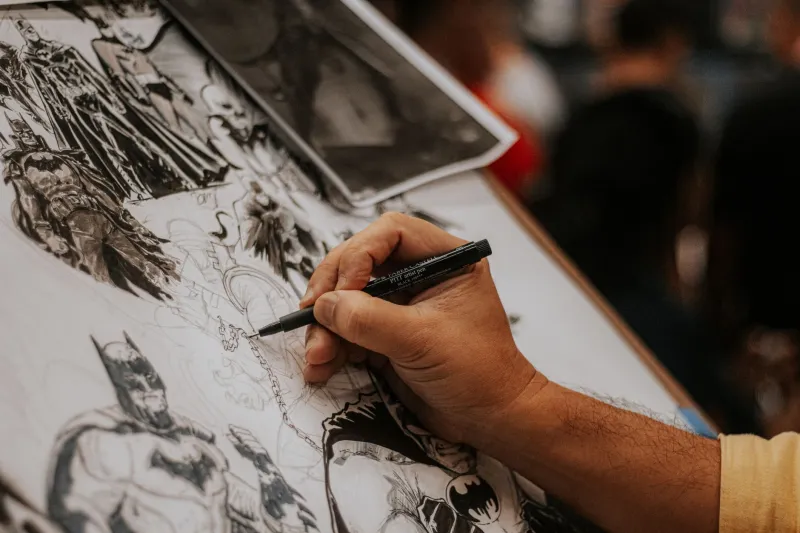
You've got a long box full of comics you love. Maybe a few slabbed books behind glass, a run of something classic you've been hunting for years. The covers look great. The grades are solid. But here's a question worth sitting with: do you actually know who made the thing you're holding?
Because in a lot of cases, the answer is messier than you'd expect.
Comics history is littered with artists who poured years of their lives into characters and worlds that went on to become cultural juggernauts — and then got quietly sidelined while the royalty checks went elsewhere. We're talking about real people whose creative DNA is baked into the books sitting in your collection right now, whose names don't appear on the reprint, the omnibus, or the anniversary edition.
That's not just a publishing ethics problem. For serious collectors, it's a knowledge gap that changes the entire meaning of what you own.
The Machine That Swallows Credits
Let's be honest about how this happens. The major publishers — Marvel and DC especially — spent decades operating under work-for-hire contracts that were, by modern standards, pretty brutal. Artists and writers signed away rights to characters and stories in exchange for page rates that looked okay in 1962 and look insulting now. When those characters became movie franchises and merchandise empires, the original creators often got nothing but a line in a Wikipedia article (if they were lucky).
Jack Kirby's battle with Marvel over original artwork and co-creator credit is probably the most famous example — a fight his family continued long after his death. Steve Ditko's complicated exit from Spider-Man and Doctor Strange is another one that still generates debate. But those guys at least have name recognition. The problem gets quieter and darker when you move past the legends.
There are pencilers who defined the visual language of entire character runs — the specific way a villain holds their hands, the architectural style of a city, the emotional weight in a hero's face — who are now completely absent from the collected editions of that very work. Reprints get reformatted, recolored, and repackaged, sometimes without so much as a table of contents that lists the original creative team. The work survives. The person behind it disappears.
Reclaimed, Rebooted, and Repackaged
It gets even murkier when you factor in how publishers handle legacy material. A character gets rebooted, and suddenly the visual design language from a 1980s run — something a specific artist spent months developing — shows up in a modern series with zero acknowledgment. That's not plagiarism in the legal sense, because the publisher owns the IP. But it's also not nothing.
Small press and independent publishers have their own version of this problem. Titles change hands when companies fold. An artist self-publishes something, it gets picked up by a distributor, that distributor goes under, and suddenly the rights are in legal limbo while the work continues circulating in digital marketplaces. The creator is still alive, still making art, still not seeing a dime.
For collectors, this creates a strange situation. You might own something genuinely rare and historically significant — a first printing from a creator who later got absorbed into a larger publisher's catalog — without even knowing it.
How to Actually Research Your Collection
Here's where this stops being just a sad story and starts being something you can act on.
Start with the Grand Comics Database (comics.org). It's free, volunteer-maintained, and genuinely comprehensive. You can look up individual issues and find credited creative teams, publication history, and reprint records. It won't catch everything, but it's the best starting point available to collectors.
Cross-reference with the Comic Book DB and creator-specific fansites. For artists who had dedicated followings before the internet made everything searchable, fan-maintained archives are sometimes the only place where complete bibliographies exist. Search the artist's name plus "bibliography" or "complete works" and see what surfaces.
Read the indicia. That tiny block of text on the inside front or back cover of older comics is packed with information — publisher, printing date, copyright holder — that can tell you a lot about a book's actual provenance. Get comfortable reading it.
Check collected editions against original issues. If you own a reprint collection, pull out the original issues it's supposedly reprinting and compare the credits pages. Missing names are a red flag worth investigating.
Follow comics historians on social media. People like Sean Howe (who wrote Marvel Comics: The Untold Story) and researchers who contribute to sites like The Jack Kirby Museum regularly surface stories about uncredited or under-credited creators. That network is a living resource.
Supporting the Artists Who Got Left Behind
Some of these creators are still around. Some are elderly and largely forgotten by the industry that profited from their work. A few have found new audiences through convention appearances, Patreon pages, or small-press work they're doing independently.
If you find an artist whose work you genuinely love in your collection, look them up. See if they're still active. Buy something directly from them if you can — original art, prints, a new book they've self-published. Follow them on social media and actually engage. Leave a review somewhere. These things matter more than they might seem.
For artists who've passed, consider supporting organizations like the Hero Initiative (heroinitiative.org), which provides financial assistance to comic creators in need, including those who never benefited from the commercial success of their work.
Why This Changes What Collecting Means
There's a version of collecting that's purely transactional — you're buying a graded slab as an asset, condition is everything, provenance only matters for authentication. That's a legitimate approach and we're not here to knock it.
But most of the collectors we know at Hawkes Comics aren't in it for that reason. They're in it because comics meant something to them. Because a specific run of panels changed how they saw the world, or got them through something hard, or introduced them to a way of thinking about heroism that stuck.
If that's you, then knowing who actually made the thing you love is part of owning it fully. A book isn't just paper and ink — it's the product of someone's imagination, someone's labor, someone's specific vision of what a story could be. When that person gets erased from the record, something real is lost.
Your collection is a piece of comics history. Know whose history it actually is.
That's not just good ethics. For a serious collector, it's good practice.